
What is arthritis?
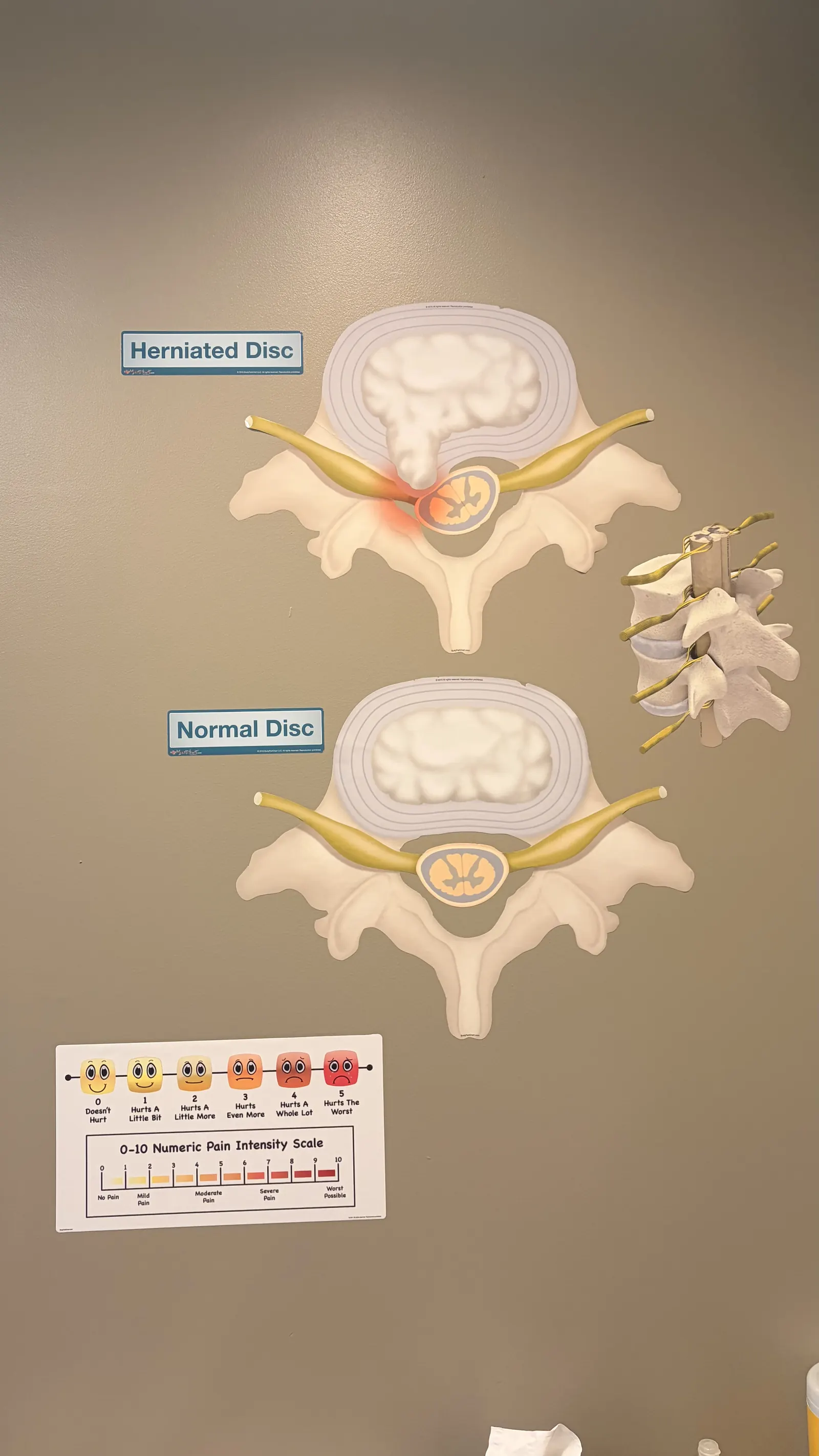
The most common kind is osteoarthritis, also called degenerative joint disease. Over time, the smooth cartilage that covers the ends of the bones wears thinner, the joint can get stiff and inflamed, and small bony changes can form around it. In the spine, the same kind of age-related wear affects the discs (degenerative disc disease) and the small facet joints (spinal arthritis).
Arthritis is common and often starts slowly. It isn’t something we can undo, but many people can move better and hurt less with the right plan.
Joints we commonly evaluate
Common symptoms
- Stiffness first thing in the morning or after sitting
- Pain that’s worse with activity or at the end of the day
- Less range of motion, or a joint that feels “tight”
- Grinding, clicking or mild swelling
- In the spine: pain with standing or walking that eases when you sit or bend forward
What we evaluate
Every plan starts with a thorough exam: your history, how the joint moves, strength, balance and walking, plus X-rays if needed. We look at the painful joint and the joints around it, because a stiff hip or weak leg muscles can put more load on an arthritic knee or back.
A non-surgical approach to arthritis
Depending on your exam, your plan may combine:
- Chiropractic care: gentle adjustments and mobilization to help stiff joints move
- Physical therapy: strengthening, mobility and balance work with our onsite PTs and PTAs
- Knee decompression therapy for selected patients with knee arthritis
- Spinal decompression for selected patients with disc-related back or neck pain
- Class IV laser therapy for sore muscles and joints
- Massage therapy for tight muscles around a stiff joint
- Acupuncture, which may help with knee and back pain for some patients
- A home exercise program and practical advice on activity, weight and footwear
See a doctor right away for a hot, red, very swollen joint, a fever with joint pain, a joint that suddenly can’t bear weight, or new numbness, weakness, or loss of bladder or bowel control.